Tony, from American tould me something he noticed when he came to China.
He explained that in English there are different words for burial places.
One sounds larger, one sounds smaller.
In the U.S., even a place with just a few graves might be called a cemetery. To him, that already feels big. So when he came to China, he was surprised that a burial place with more than fifty graves could still be described as small, like “oh that just a graveyard, that’s nothing.”
Not because it was unimportant, but because our sense of scale is different.
That was when I realized how quietly population shapes the way we describe the world. I notice this difference again and again when I meet travelers.

Another time, I met Joohye from South Korea. She was a lovely girl, but she didn’t really have a detailed plan. Before she arrived, her entire itinerary was just West Lake and the light show. This didn’t surprise me, because that’s basically all the information she could get from social media.
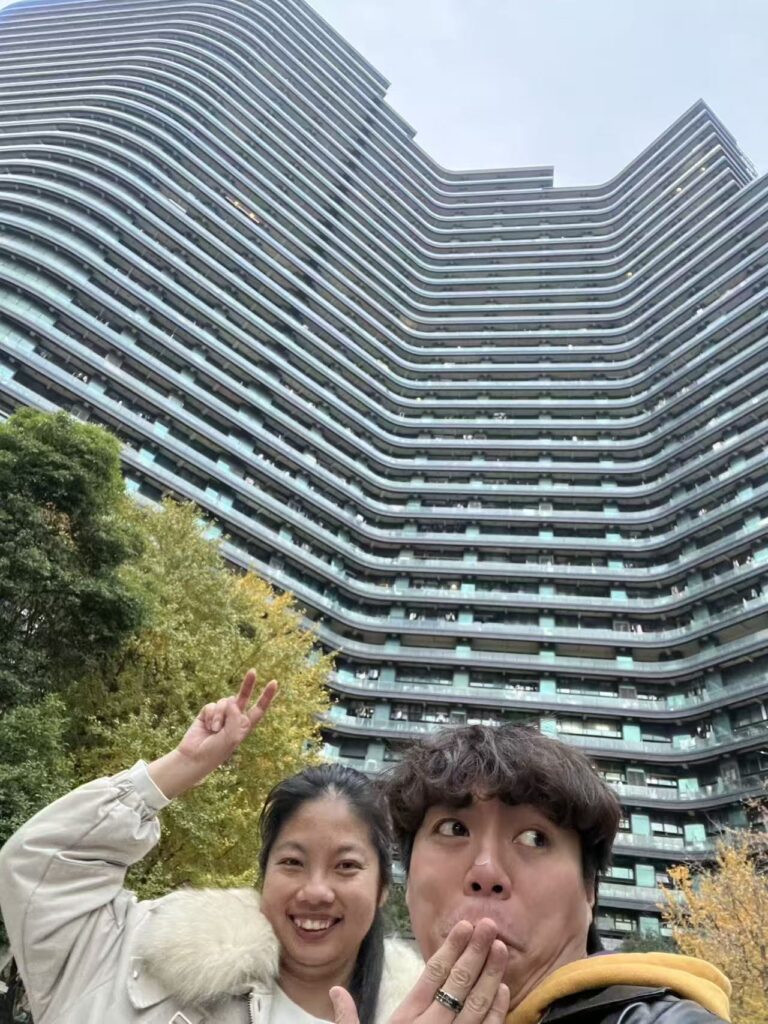
To her, the light show represented the modern side of the city. and on the way there, we passed rows of skyscrapers and office buildings. She kept looking out the window, a little silent.
“This isn’t what I imagined,” she finally said.
From everything she had read, she thought Hangzhou was simply a scenic city —
beautiful, calm, and historical.
She never realized above 12milon people actually live here. Just like she had never imagined this scale of urban life surrounding the lake.
At one point, I said something very casually:
“If you want to visit West Lake, that almost means you want to visit the whole of Hangzhou.”
She looked surprised. and I had to explained that West Lake isn’t one single spot. How it has many sides, many moods. and how different areas feel completely different. Some are lively, some are quiet, some feel modern, others feel timeless.
To combine everything together, that are really experience West Lake, And without realizing it, you begin to move through the city itself.
She hadn’t expected that at all.
None of the travel guides or TikTok videos she had seen had ever mentioned this.

I know, many travelers prepare carefully. They choose landmarks and count days. But what often gets missed is how scale works differently here.
A place known for nature can still be deeply urban. A lake can sit at the heart of a city with millions of residents. When time is too limited, the experience becomes fragmented —beautiful, but incomplete.
For those of us who live here, this contrast feels natural. We switch between scenery and skyline every day. We rarely stop to think about how unusual this might feel to visitors. But when travelers begin to notice it, that moment of surprise is often the beginning of real understanding.
————
When I see travelers struggling with this, I usually give gentle advice.
Before fixing your plan, talk to someone who lives there.
Ask how long things actually take. Ask what feels rushed, and what feels right.
Sometimes, adding just one more day changes everything.
The city becomes less overwhelming. Moments appear between destinations.
And if you don’t know who to ask, you can always ask someone like me —
a local who enjoys sharing these small, human details that don’t show up on maps.