
I get this question every week. From guests booking tours, from friends planning trips, from people who haven’t been to China in five years and assume nothing has changed.
A friend of mine brought her Dutch partner to China last year. First day, they went to a local noodle shop. He pulled out his credit card. The shop owner pointed at the QR code taped to the wall. He pulled out cash. No change. That moment — standing in a Hangzhou noodle shop, hungry, with a card nobody accepts and cash nobody can break — is the exact reason I wrote this.

If you search Reddit’s r/travelchina, you’ll find people posting things like “Just arrived in China but Alipay and WeChat Pay are not working,” “Alipay verification spinning forever,” and “Payments getting declined even after successfully binding a Visa or Mastercard.” One traveler from Europe couldn’t get his card to work anywhere for two weeks — turned out his bank had blocked international transactions by default. Another spent days in a loop where Alipay accepted his card but killed every payment during the security handshake. The solution: turn off your VPN before you tap “pay.”
Here’s the short answer: you can use your phone. It’s easier now than it’s ever been.
The longer answer involves a few steps, a couple of apps, and some backup cash. Let me walk you through it.
The Two Apps You Need
Alipay and WeChat Pay. These two handle just about everything in China. Taxis. Restaurants. Street food. Temple entrance fees. Train tickets. Hotel checkouts. Even the granny selling tea eggs from a thermos at the bus station.
Since July 2023, both apps allow you to link an overseas Visa or Mastercard. You don’t need a Chinese bank account anymore. That was the old barrier, and it’s gone.
Setting Up Alipay
Download the app from your phone’s store. Sign up with your mobile number — a foreign number works fine.
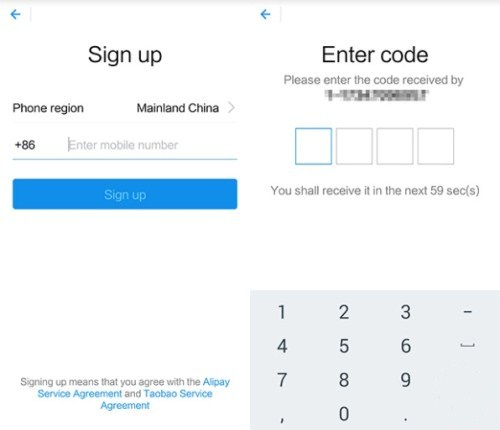
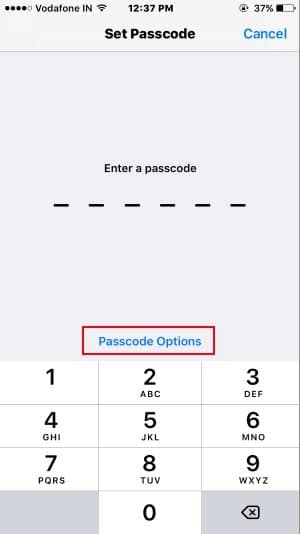
Alipay sends a confirmation code. You type it in. Set a six-digit payment password. That’s the code you’ll use every time you pay.
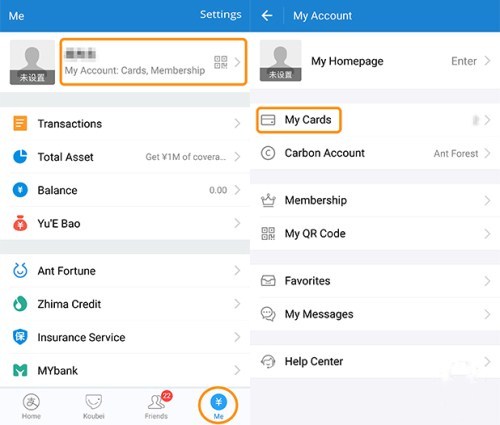
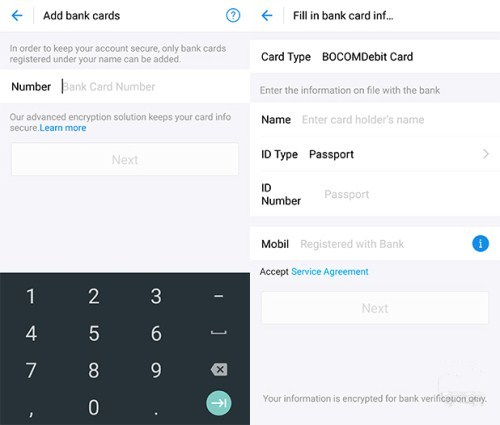
Next, add a card. Tap “Me” at the bottom right, then “My Account,” then “Add Card.” Enter your card number. Fill in your name exactly as it appears on your bank account. The app sends another code to your phone. Enter it. Done.
One thing to watch — your name needs to match your bank records exactly. A lot of people get stuck here because their card has a middle initial and they typed the full name.
Another common issue: if you’re using a VPN, turn it off before you pay. Alipay’s security system checks your IP during the transaction. If it detects a foreign or VPN IP, it kills the payment silently — no error message, just a loop that keeps failing. This is the #1 reason people on Reddit report that their card “works but payments won’t go through.”
When scanning your passport for verification, use a dark, matte surface. A black t-shirt or bedsheet works. The passport photo page has a holographic overlay, and under bright light the AI misreads it and rejects the scan.
There’s also the AI Hangzhou platform — search for it inside Alipay. It bundles payment, transport, hotel check-in, and tax refund into one place for foreign visitors.
Setting Up WeChat Pay
Similar story. Open WeChat, go to “Me” → “Services” → “Wallet” → “Add Card.” Link your Visa or Mastercard.
One new thing in 2026: PayPal users in the US can now scan WeChat Pay QR codes directly. No extra setup needed.
What About Cash?
China runs on phones. A small shop might not have change for a 100 yuan note. A taxi driver might point at the QR code instead of the meter.

That said, carry 500–1,000 yuan in small bills. Small street vendors. Temple donation boxes. Backup when your phone battery dies. The old-school dumpling place that never changed its ways.
Exchange money at the airport, a bank, or your hotel. Major banks in Hangzhou — Bank of China, ICBC — have ATMs that accept foreign cards.
If You Already Use an E-Wallet from Home
Good news. Ten overseas e-wallets now work directly in China through the Alipay+ network:
AlipayHK (Hong Kong). Touch ‘n Go (Malaysia). Kakao Pay, Naver Pay, and Toss Pay (Korea). TrueMoney (Thailand). Changi Pay and OCBC (Singapore). Hipay (Mongolia). mPay (Macau).
If you use any of these, you can scan Alipay QR codes in China. Your home app handles the exchange rate. No extra downloads.
Digital Yuan
China also has a digital currency app called e-CNY. You can register with a foreign phone number, top up with a Visa or Mastercard, and spend it anywhere that accepts digital yuan. Unused balance goes back to your card.
Tax Refund — Nice Bonus
If you shop in Hangzhou, you can get the tax back when you leave. There are 267 tax-refund shops in the city now, and 124 of them offer instant refund — you don’t wait at the airport.
New in 2026: Alipay’s “one tap” refund. Bump your phone at the counter. Done. Went from 20 minutes to about 2.
Zhejiang and Shanghai also recognize each other’s tax-refund shops. If you buy in Hangzhou and fly out of Shanghai, you’re covered.
The Bottom Line
One phone. Two apps. Some cash for backup.
Download Alipay before you come. Link a card. Turn off your VPN. Test it with a small payment at the airport convenience store. By the time you reach the city, you’ll wonder why you worried.
If you’re still unsure — or you just want someone to walk you through it before you land — I offer online pre-trip consultations. Book a session here. We’ll get your phone set up, answer your questions, and you’ll arrive ready.